 Espiral Atlas
Acetabulum
acetabulum
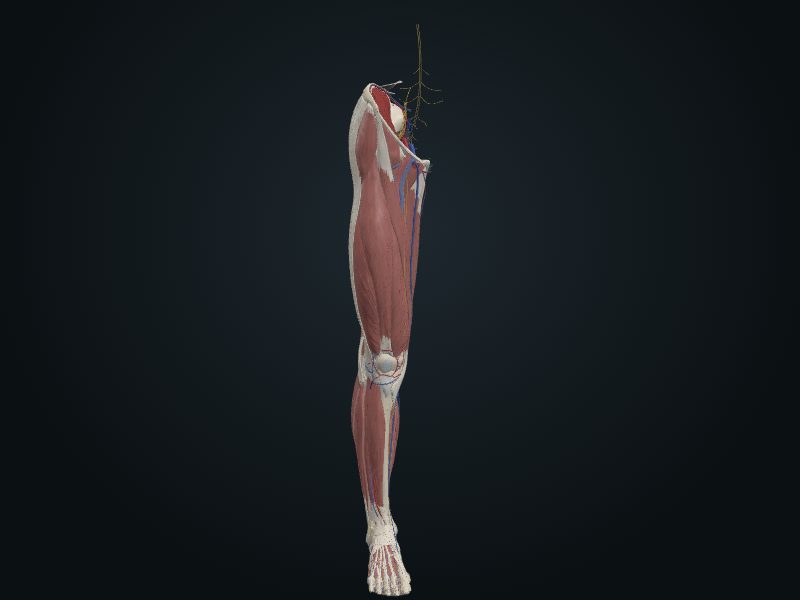
Study entry
Description
A cup-shaped cavity on the lateral surface of the hip bone, formed by the three parts of the bone; it faces downward and to the side.
Relations
It articulates with the head of the femur at the hip joint.
Source: cap. 7, «Huesos del miembro inferior: hueso coxal»
Clinical correlation
Upright posture and the fit of the hip
The human acetabulum faces downward, outward and forward. The iliac part of its rim covers the femoral head and passes the weight to it in standing, still or walking; for this reason the hip is more stable under load, as when lifting something heavy. If the ilium covers the head less (which the radiograph measures by the Wiberg angle), the joint can be unstable. The axis of the acetabulum points forward and that of the neck of the femur backward, forming between them 30° to 40°: in standing, the anterior part of the head is «exposed», against the capsule. Rarely does more than 40% of the head touch the acetabulum in any position.
Congenital dislocation of the hip
It affects about 1.5 in every 1,000 live births, is bilateral in half the cases and at least eight times more common in girls. The head of the femur does not seat in the acetabulum. The child cannot abduct the thigh, and the limb looks (and works as) shorter, because the dislocated head lies higher; the Trendelenburg sign appears on walking. A quarter of the cases of hip arthritis in adults come from sequelae of this dislocation.
Related clinical cases
- Upright posture and the fit of the hip
- Congenital dislocation of the hip