 Espiral Atlas
Coronoid process of the ulna
processus coronoideus ulnae
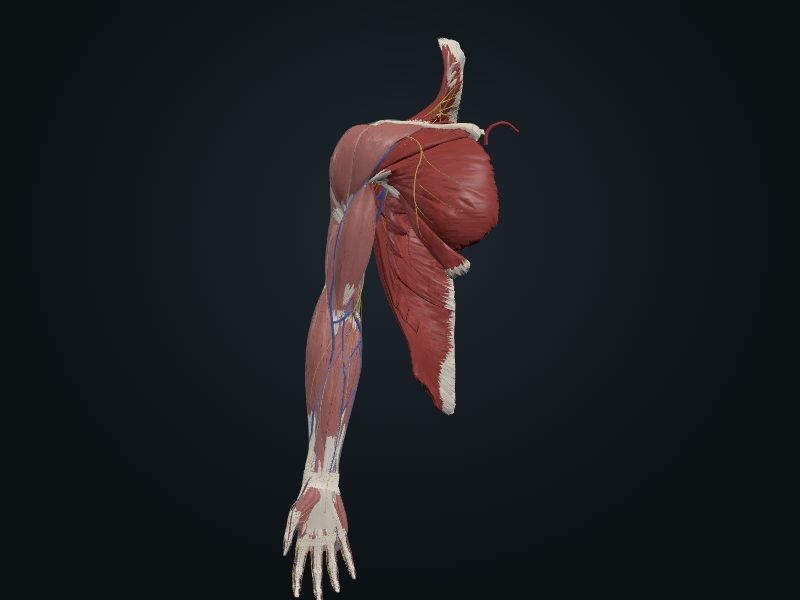
Study entry
Description
Anterior projection of the proximal end of the ulna.
Relations
Forms the anterior wall of the trochlear notch; origin of the ulnar head of the pronator teres; it enters the coronoid fossa in full flexion.
Source: cap. 3, «Huesos del antebrazo»
Clinical correlation
Reconstruction of the ulnar collateral ligament ("Tommy John")
Ruptures and sprains of the ulnar collateral ligament are increasingly common in throwers (baseball, rugby, javelin, water polo). The reconstruction uses a long tendon from the person themself, from the forearm of the other side or from the leg (palmaris longus or plantaris): 10 to 15 cm of tendon pass through holes in the medial epicondyle of the humerus and in the side of the coronoid process of the ulna.
Dislocation of the elbow
Posterior dislocation happens when the child falls on the hands with the elbows flexed; it also comes from hyperextension or from a blow that pushes the ulna backward. With the radius and ulna behind, the end of the humerus ruptures the weak anterior part of the capsule. The ulnar collateral ligament usually tears, and there may be a fracture of the head of the radius, the coronoid process or the olecranon. If the ulnar nerve is injured, the little finger becomes numb and flexion and adduction of the wrist weaken.
Related clinical cases
- Reconstruction of the ulnar collateral ligament ("Tommy John")
- Dislocation of the elbow