 Espiral Atlas
Head of the femur
caput femoris
Study entry
Description
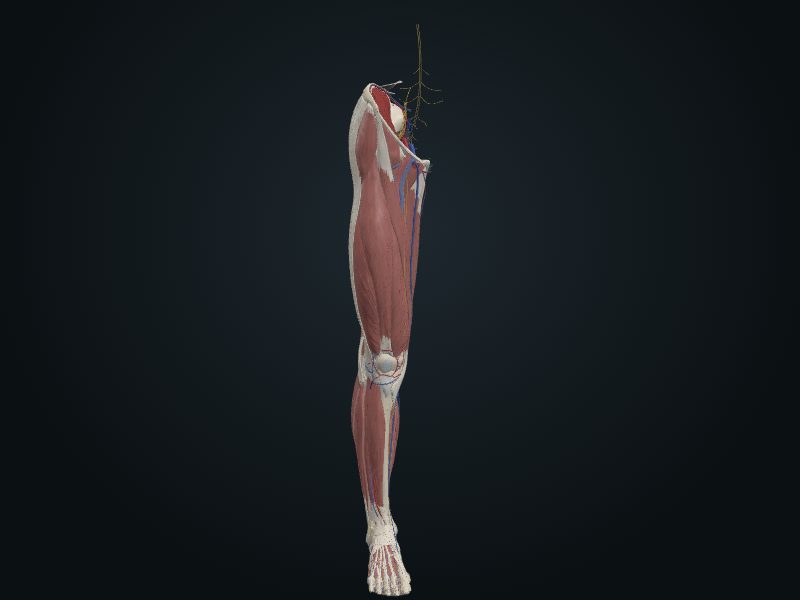
Two thirds of a sphere covered with cartilage, at the proximal end; the axis of the head and neck points upward and inward.
Relations
It articulates with the acetabulum.
Palpation
Deep, under a point a thumb's width below the middle of the inguinal ligament.
Source: cap. 7, «Huesos del miembro inferior: fémur» y «Anatomía de superficie»
Clinical correlation
Slipped capital femoral epiphysis
Between 10 and 17 years of age, the epiphysis of the femoral head can slip on the neck because the epiphysial plate is the weak point. The cause is acute trauma or repeated microtrauma that shears the epiphysis, especially in abduction and lateral rotation of the thigh. The slip is usually slow and produces a progressive coxa vara. The first symptom is often discomfort in the hip that may be felt in the knee. A radiograph of the upper end of the femur confirms it.
Necrosis of the femoral head in children
In a child, traumatic dislocation of the hip injures the artery of the head of the femur. Fractures that separate the superior epiphysis of the femur (the growth zone between head and neck) also cut off the blood supply of the head. The result can be post-traumatic avascular necrosis: the articular surfaces stop fitting together and growth of the epiphysis is delayed. It is most common between 3 and 9 years and gives hip pain that can radiate to the knee.
Related clinical cases
- Slipped capital femoral epiphysis
- Necrosis of the femoral head in children