 Espiral Atlas
Head of the humerus
caput humeri
Study entry
Description
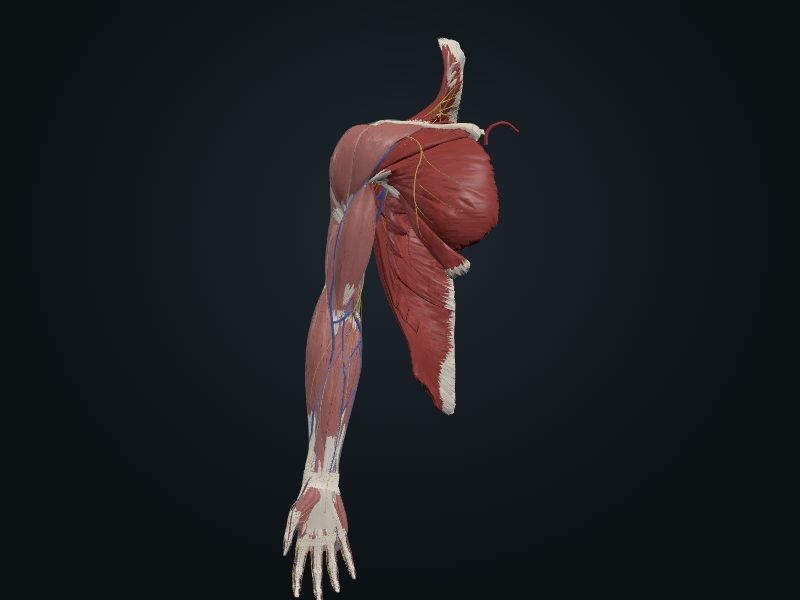
Spherical surface of the proximal end of the humerus.
Relations
Articulates with the glenoid cavity of the scapula.
Source: cap. 3, «Huesos del miembro superior: húmero»
Clinical correlation
Fracture-dislocation of the proximal epiphysis of the humerus
In a child or adolescent, a blow to the shoulder may separate the proximal epiphysis of the humerus, because the capsule of the shoulder joint, reinforced by the rotator cuff, is stronger than the epiphysial plate. In severe cases the shaft of the humerus is displaced a lot, but the head remains in place, in the glenoid cavity.
Dislocation of the shoulder
Because it is very mobile and unstable, the shoulder dislocates often. The coracoacromial arch and the cuff prevent exit upward, so the head of the humerus comes out downward, but the dislocation is called anterior or posterior (rare) according to whether it descends in front of or behind the infraglenoid tubercle and the long head of the triceps. The anterior is the most common, in young adults and athletes, from excessive extension and lateral rotation: the capsule and the glenoid labrum may be torn from the front of the glenoid cavity. With the arm fully abducted, a blow drives the head onto the low, weak part of the capsule.
Related clinical cases
- Fracture-dislocation of the proximal epiphysis of the humerus
- Dislocation of the shoulder