 Espiral Atlas
Interosseous membrane of leg
membrana interossea cruris
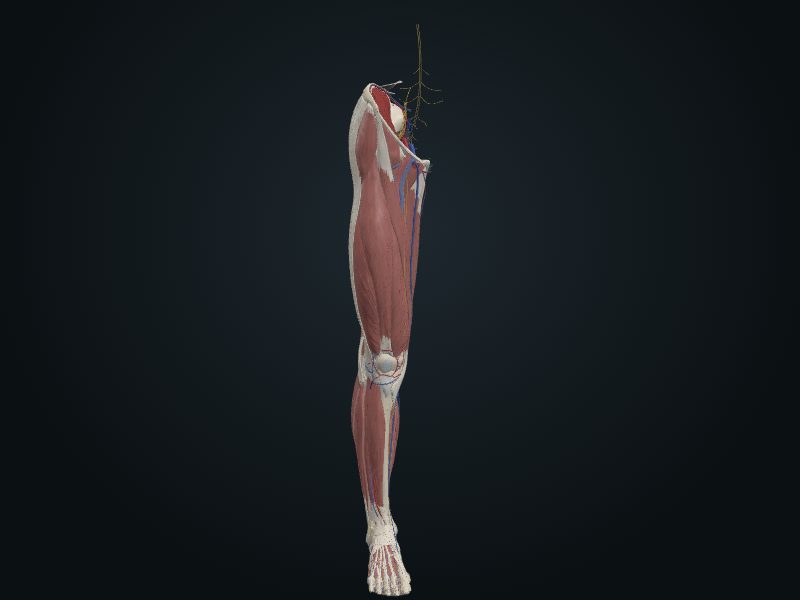
Study entry
Classification
Part of the tibiofibular syndesmosis (fibrous joint), together with the anterior and posterior tibiofibular ligaments.
Surfaces
Interosseous borders of the tibia and the fibula.
Capsule
The fibers run obliquely, mostly downward and outward, from the tibia to the fibula. [CHECK: not in Moore] It separates the anterior and posterior compartments of the leg.
Movements
It lets the fibula rise a little, but resists its being pushed down.
Blood supply
[CHECK: Moore does not describe it in the passages consulted (look in another source).]
Innervation
[CHECK: Moore does not describe it in the passages consulted (look in another source).]
Source: cap. 7, fig. 7-96 e «Articulaciones tibiofibulares»
Clinical correlation
Compartment syndrome and fasciotomy
The fascial compartments of the lower limb are almost closed spaces, limited at the ends by the joints. Burns, intense and prolonged use of the muscles or blunt trauma cause bleeding, edema and inflammation inside them. Because the septa and deep fascia of the leg do not give way, the pressure rises until it compresses the contents; the small vessels of the muscles and nerves are the first to suffer. What remains after the compression goes into ischemia and can be lost for good (motor loss of the muscles without blood supply or without nerve). Distal pulses that disappear and cold skin beyond the point of compression show arterial compression.
Related clinical cases
- Compartment syndrome and fasciotomy