 Espiral Atlas
Calcaneal tuberosity
tuber calcanei
Study entry
Description
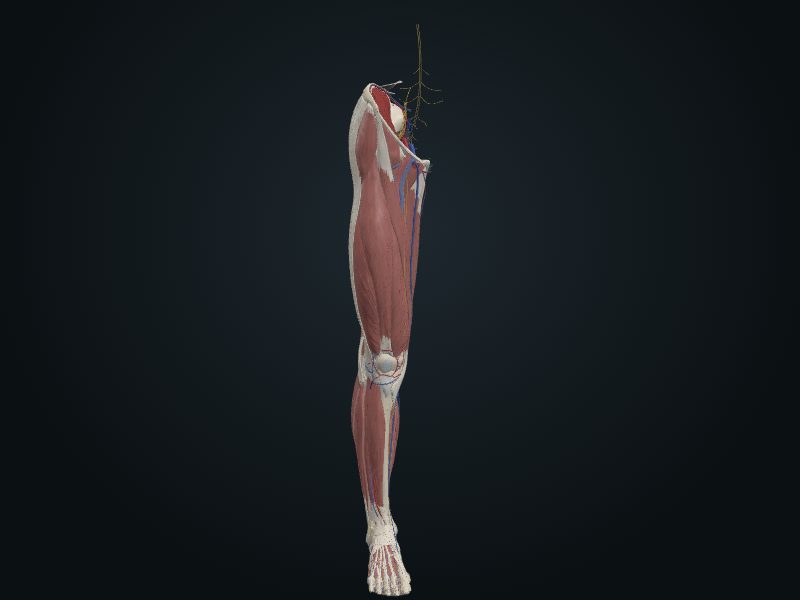
The posterior, weight-bearing prominence of the calcaneus, with the medial and lateral processes; only the medial one touches the ground in standing.
Palpation
The medial process is broad, but the skin and fat of the sole usually hide it.
Source: cap. 7, «Huesos del miembro inferior: huesos del pie: tarso» y «Anatomía de superficie»
Clinical correlation
Calcaneal tendinitis
It accounts for 9% to 18% of runners' injuries. Microscopic tears of the collagen fibers, especially just above the insertion on the calcaneus, inflame the tendon and hurt when walking, even more with a rigid sole. It appears with repetitive activity, in people who return to running after a long time off or suddenly increase training, and also with bad footwear or uneven ground.
Rupture of the calcaneal tendon
It usually ruptures in people who train little and have already had tendinitis. In a strong push-off (plantar flexion with the knee extended) a snap is heard, sharp pain comes in the calf and the foot drops into dorsiflexion. In complete rupture, a gap is palpable 1 to 5 cm above the insertion on the calcaneus. The muscles affected are the gastrocnemius, soleus and plantaris; it is perhaps the most serious acute muscle injury of the leg. The person cannot plantar flex against resistance (cannot lift the heel or balance on that foot), and passive dorsiflexion goes beyond normal (about 20°). They walk swinging the limb outward and passing over the foot, with no push-off.
Plantar fasciitis
Inflammation of the plantar aponeurosis from overuse: running and impact aerobics, especially with bad footwear. It is the most common hindfoot problem in runners. The sole and heel hurt, more in the first steps in the morning and after sitting; it improves in 5 to 10 minutes of activity and returns after rest. It is tender to pressure at the proximal attachment of the aponeurosis, on the medial process of the calcaneal tuberosity, and on the medial surface of the bone. It gets worse with passive extension of the great toe, with dorsiflexion of the ankle and with load.
Related clinical cases
- Calcaneal tendinitis
- Rupture of the calcaneal tendon
- Plantar fasciitis