 Espiral Atlas
Maxillary third molar
dens serotinus maxillaris
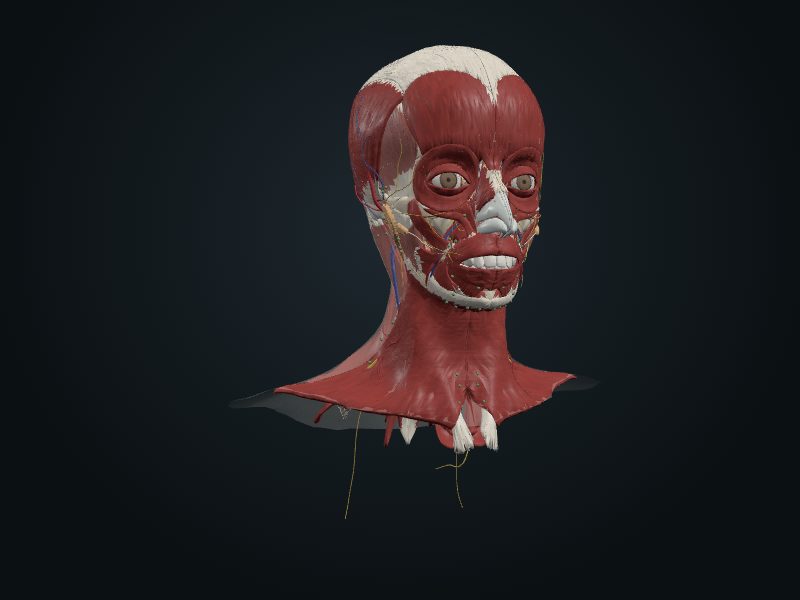
Study entry
Location
Socket of the alveolar process of the maxilla, at the back of the arch, next to the tuberosity of the maxilla.
Structure
It is the last tooth to erupt and the most variable: it may have a small, cone-shaped crown and short roots, usually fused. Many people do not form it (agenesis). The 3D model does not include this tooth. It erupts between 13 and 25 years.
Neighborhood
It lies just in front of the tuberosity of the maxilla and below the maxillary sinus.
Blood supply
Posterior superior alveolar artery, branch of the maxillary; the veins accompany the artery.
Innervation
Superior dental plexus, formed by the posterior superior alveolar branches of the maxillary nerve (CN V2).
Lymphatics
The lymphatic vessels of the tooth and gum drain mainly into the submandibular lymph nodes.
Clinical
It often stays retained (impacted) for lack of space and can cause pain, pericoronitis and caries in the second molar. The root can also raise the floor of the maxillary sinus.
Source: cap. 8, «Dientes»; tabla 8-13 B (erupción de los dientes permanentes)