 Espiral Atlas
Ethmoidal cells (ethmoid sinuses)
cellulae ethmoidales
Study entry
Location
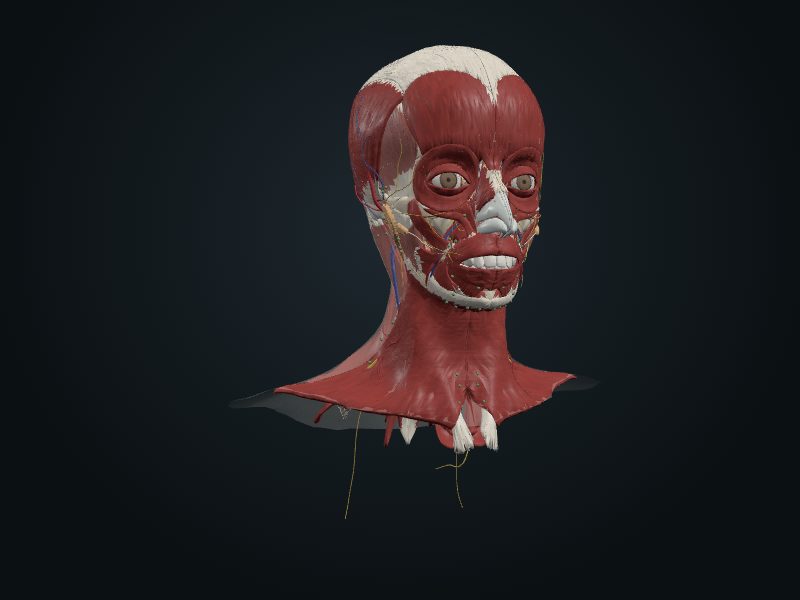
Small invaginations of the mucosa of the middle and superior nasal meatuses into the ethmoid bone, between the nasal cavity and the orbit.
Structure
They do not usually show on plain radiographs before age 2, but are recognized on CT. The anterior ones drain, directly or indirectly, into the middle meatus, through the ethmoidal infundibulum; the middle ones open directly into the middle meatus and form the ethmoidal bulla, a prominence on the upper border of the semilunar hiatus; the posterior ones open directly into the superior meatus.
Innervation
Anterior and posterior ethmoidal branches of the nasociliary nerve (CN V1).
Source: cap. 8, «Senos paranasales»
Clinical correlation
Fractures of the orbit
A direct blow to the rim of the orbit fractures the sutures between the bones that form it. The medial and inferior walls are thin and can break with the rim intact, in «blowout» fractures. The medial wall can involve the ethmoidal cells and the sphenoidal sinus, and the floor can reach the maxillary sinus. The upper wall is stronger, but translucent: a pointed object can pierce it and reach the frontal lobe. Hemorrhage inside the orbit pushes the eyeball forward and causes exophthalmos. Infection can reach the cavernous sinus through the ophthalmic vein.
Tumors of the orbit
The optic nerve lies near the sphenoidal sinus and the posterior ethmoidal cell. A malignant tumor in these sinuses can erode the thin bony walls of the orbit and compress the nerve and the orbital contents. Tumors of the orbit cause exophthalmos. Tumors of the middle cranial fossa enter the orbit through the superior orbital fissure. Those of the temporal or infratemporal fossa enter through the inferior orbital fissure.
Sinusitis
The paranasal sinuses continue with the nasal cavities through openings. Infection can pass from the nasal cavity and inflame and swell the mucosa of the sinuses (sinusitis), with local pain. Sometimes several sinuses become inflamed (pansinusitis). Edema of the mucosa can block one or more openings to the nasal cavity.
Infection of the ethmoidal cells
If nasal drainage is blocked, infection of the ethmoidal cells can cross the fragile medial wall of the orbit. Severe infections can cause blindness, because some posterior ethmoidal cells lie near the optic canal, which transmits the optic nerve and the ophthalmic artery. The infection can also reach the dural sheath of the optic nerve and cause optic neuritis.
Related clinical cases
- Fractures of the orbit
- Tumors of the orbit
- Sinusitis
- Infection of the ethmoidal cells