 Espiral Atlas
Zygapophysial (facet) joints
articulationes zygapophysiales
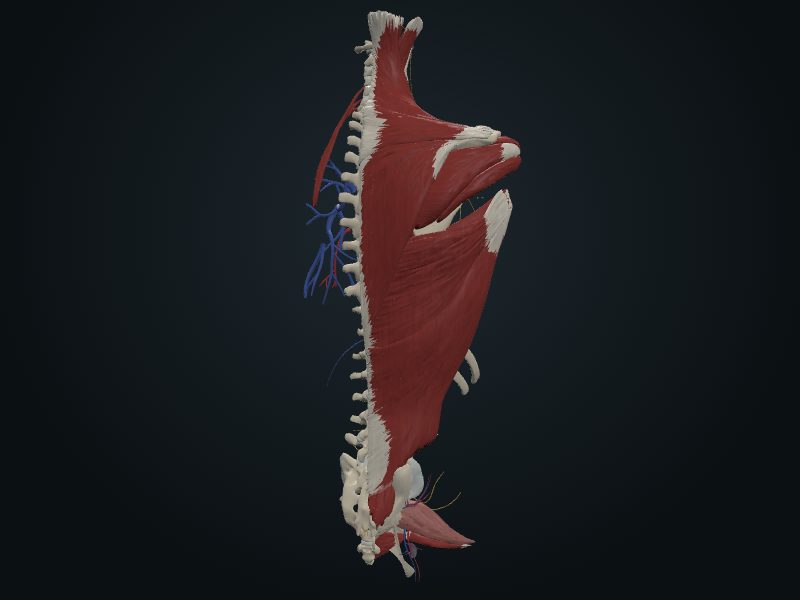
Study entry
Classification
Plane synovial joints.
Surfaces
Between the superior and inferior articular processes (zygapophyses) of adjacent vertebrae; together with the pedicles they form the posterior limits of the intervertebral foramina.
Capsule
Each joint has a capsule attached to the edges of the articular surfaces; in the cervical region it is especially thin and loose, which reflects the large range of motion. Accessory ligaments join the laminae, transverse processes and spinous processes.
Movements
Gliding movements; the shape and arrangement of the surfaces determine the possible movements. In the cervical and lumbar regions they also bear some weight, together with the discs. In the lumbar region, the fit of the processes prevents rotation.
Blood supply
Posterior branches of the segmental arteries of the level, which supply the structures of the vertebral arch and the muscles of the back: in the neck, from the vertebral and ascending cervical arteries; in the thorax, from the posterior intercostals; in the abdomen, from the subcostal and lumbar arteries.
Innervation
Articular branches of the medial branches of the posterior rami of the spinal nerves: each joint receives from two adjacent nerves (the one at the same level and the one at the level above); to denervate a joint, the medial branches of both must be cut.
Clinical
They are clinically important because of their proximity to the intervertebral foramina.
Source: cap. 2, «Articulaciones de la columna vertebral»: articulaciones de los arcos vertebrales; «Vascularización de la columna vertebral» e «Nervios de la columna vertebral»