 Espiral Atlas
Calcaneus
calcaneus
Study entry
Parts
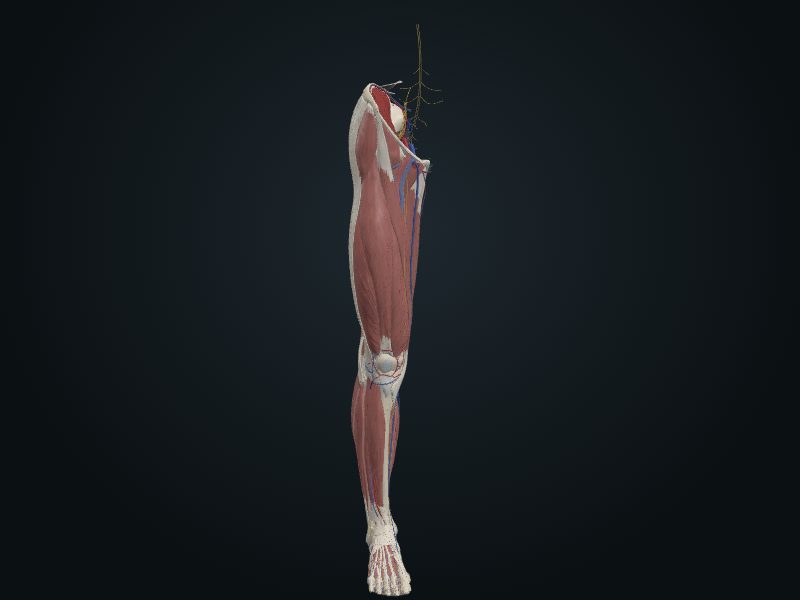
The largest and strongest bone of the foot (the heel bone); it carries to the ground most of the weight that comes from the talus. The anterior two thirds of the upper surface articulate with the talus and the anterior surface, with the cuboid. On the lateral surface, the fibular trochlea; on the medial, the sustentaculum tali; behind, the calcaneal tuberosity.
Joints
With the talus, above; calcaneocuboid (anterior surface with the cuboid).
Palpation
The whole lateral surface lies under the skin, with the fibular trochlea below and in front of the lateral malleolus; the sustentaculum tali, a finger's breadth below the medial malleolus. The medial process of the tuberosity is broad, but the skin and fat of the sole usually hide it.
Source: cap. 7, «Huesos del miembro inferior: huesos del pie: tarso» y «Anatomía de superficie de los huesos del pie»
Clinical correlation
Fracture of the calcaneus
A hard fall on the heel, from a ladder for example, can break the calcaneus into several fragments (comminuted fracture). It is usually disabling because it disrupts the subtalar joint, where the talus rests on the calcaneus.
Retrocalcaneal bursitis
Inflammation of the deep bursa of the calcaneal tendon, between the tendon and the upper part of the posterior surface of the calcaneus. It hurts behind the heel and appears more in long-distance runners and basketball and tennis players, from the continuous friction of the tendon gliding over the bursa.
Plantar fasciitis
Inflammation of the plantar aponeurosis from overuse: running and impact aerobics, especially with bad footwear. It is the most common hindfoot problem in runners. The sole and heel hurt, more in the first steps in the morning and after sitting; it improves in 5 to 10 minutes of activity and returns after rest. It is tender to pressure at the proximal attachment of the aponeurosis, on the medial process of the calcaneal tuberosity, and on the medial surface of the bone. It gets worse with passive extension of the great toe, with dorsiflexion of the ankle and with load.
Related clinical cases
- Fracture of the calcaneus
- Retrocalcaneal bursitis
- Plantar fasciitis